White oak felled in Pennsylvania in 1773 found under 22 feet of Lower Manhattan landfill
Ground Zero Gunboat Stands Again 25 Years After the Twin Towers Fell
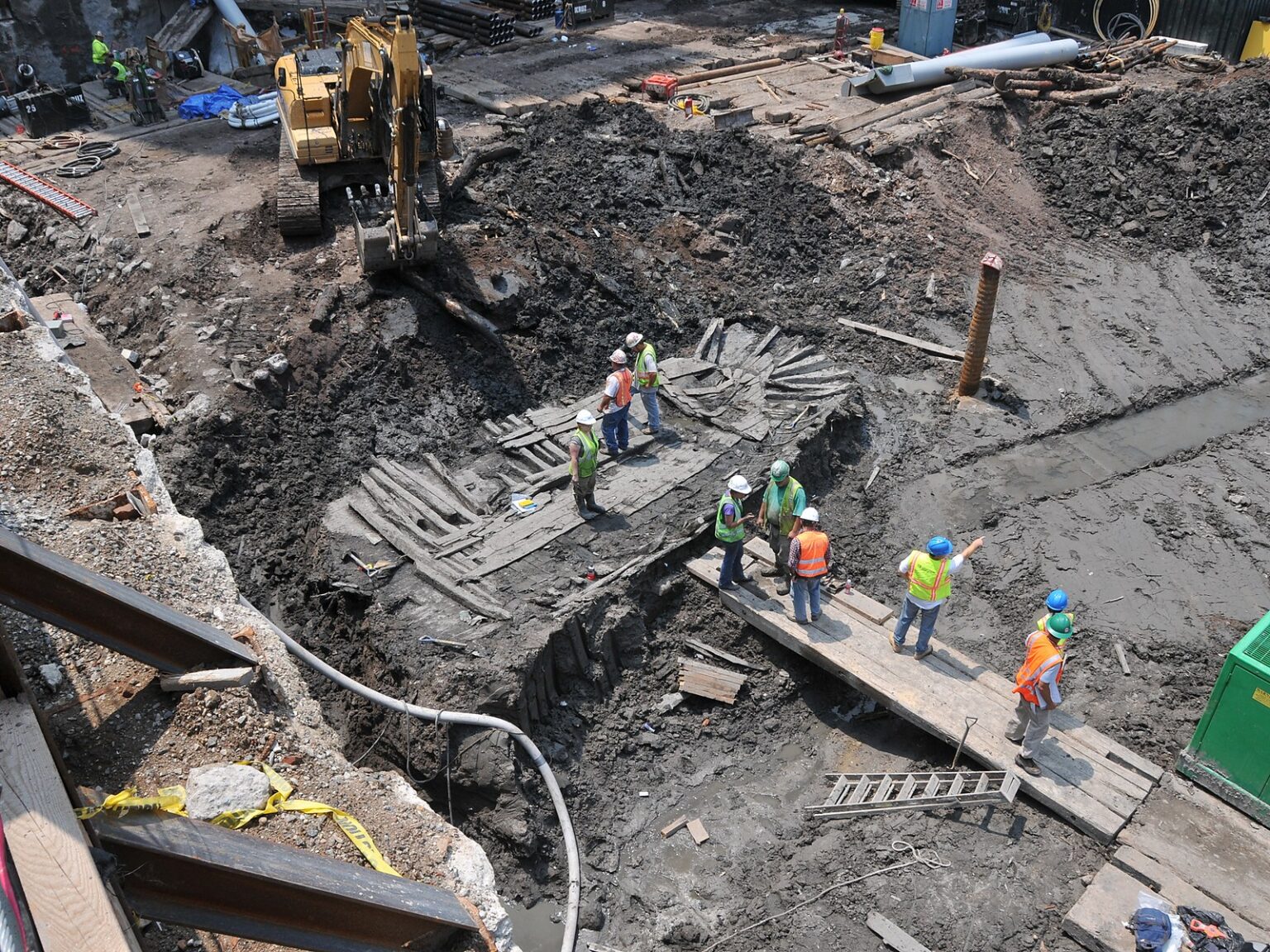
The New York State Museum has opened Revolutionary New York, a 7,000-square-foot exhibition of more than 200 artefacts, around the gunboat that crews pulled from the World Trade Centre site in July 2010. That is according to the museum, which opened the exhibition just in time for the United States 250th anniversary of the War of Independence and comes 25 years to the day since the world, as we know it, changed forever.
“Few places were more central to the birth of our nation than New York,” Jennifer Saunders said in the museum’s announcement of 24 June. The executive director counts a third of the Revolution’s battles in present-day New York, and the gunboat anchors Power of Place, first of five sections.
Visitors can put a hand on a six-pound British cannon recovered in 1986 from the US Assay site in Lower Manhattan. The cannon sits on a replica sled that students at WSWHE BOCES built to Henry Knox’s pattern. Choosing Sides, the next section, carries the chains that spanned the Hudson River to keep British ships from sailing north.
Archaeologists monitoring the dig for the Vehicular Security Center found the hull under 22 feet of oxygen-poor landfill and had two weeks to work. They recovered 30 feet of a 50-foot vessel, 18 feet in the beam, with a raised deck built for shallow water. The museum holds more than 600 pieces of timber and 2,000 artefacts from the site, including musket balls.

The Maryland Archaeological Conservation Laboratory held the timbers first, and that is where Edward Cook took his tree-ring samples. Cook’s Columbia tree-ring team matched the white oak frame to trees felled in south-eastern Pennsylvania in 1773, the timber country that built Independence Hall.
Hickory, spruce, and pine make up the rest of the hull, and every timber shares one ring sequence. Cook read that single sequence as one small shipyard’s stock, and the museum places it near Philadelphia in the early 1770s.
Conservators at Texas A&M University’s Center for Maritime Archaeology and Conservation spent 14 years on the timbers, soaking out two centuries of salt. They removed and cleaned every iron nail and scanned the 600 pieces into a detailed three-dimensional model. Freeze-drying came last, and Texas A&M says the process removed 5,000 pounds of moisture from the wood.

Peter Fix, Texas A&M’s watercraft conservator, said the vessel, “if it is what we think it was,” defended the Delaware Bay from the British. Archaeologists read teredo shipworm borings in the wood as a passage through the southern Atlantic, possibly as far as the Caribbean. The builders used iron nails and fasteners, a sign of a quick build, and the iron oxidised over two centuries in the wet fill.
A pewter button stamped 52 came out of the hull, and researchers tie it to the British Army’s 52nd Regiment of Foot. That suggests a capture, possibly at the fall of Philadelphia in 1777, and the museum says the ship was out of commission by the 1790s. The hull went into the landfill that pushed New York City into the Hudson River, and the museum still calls its route there a mystery.
“New York stood at the epicenter of our fight for freedom,” Devin Lander said in May 2025, when the timbers came back to Albany. The State Historian called the gunboat “a physical reminder of that courage and grit”, and Fix’s team rebuilt the hull in the South Lobby. Visitors watched the reassembly under a first exhibition, The Gunboat at Ground Zero: A Revolutionary War Mystery, from 14 May 2025 to 31 January 2026.

Michael Lucas, the museum’s curator of historical archaeology, did the final cleaning of each timber before reassembly began. The museum calls the hull “one of the few documented American-built Revolutionary War vessels”, and Lucas oversees a collection of more than four million objects.
The Lower Manhattan Development Corporation authorised as much as US$1.1 million to conserve and exhibit the ship. The museum, founded in 1836 and the oldest in the United States, opens Tuesday to Sunday at 222 Madison Avenue with no admission charge.
“It’s a boat. Boats are huge magnets, and people just want to be part of them,” Fix said of the crowds in May 2025.
- For more of timber’s connection to September 11, read Wood Central’s report on the Flight 93 Memorial Groves [add slug at publish] and its story on the Survivor Tree at the memorial in Manhattan.
Article Origin: Published by Wood Central