Why Fort Worth’s $1.7B Westside Village Is No Mass Timber ‘Cookie‑Cutter’
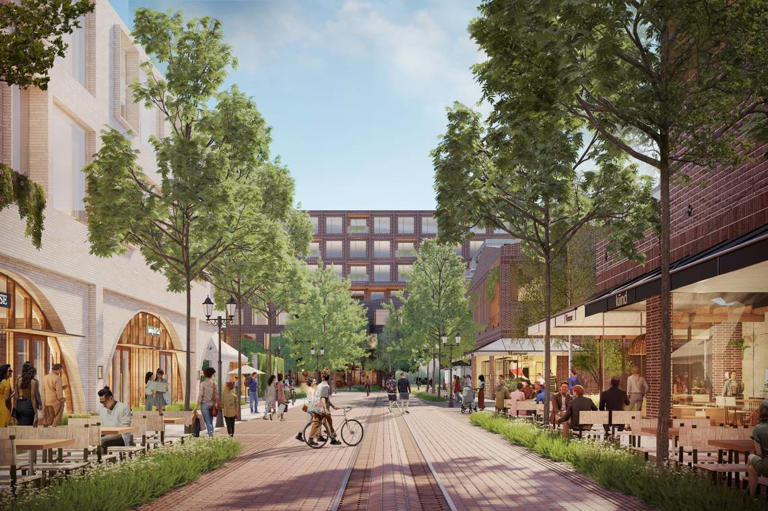
The 37‑acre district is Fort Worth’s largest office project in 43 years and uses adaptive‑reuse architecture and a multi‑architect design approach to ensure Westside Village looks anything but uniform.
A $1.7 billion, 37‑acre development on Fort Worth’s west side will deliver the city’s largest injection of new office space in more than 43 years, with timber beams and panels central to its design. Dubbed “Westside Village,” the development is led by Dallas‑based Larkspur Capital and Keystone, and will combine new mass‑timber office buildings with renovated industrial structures and a walkable district of plazas, paseos and green space.
Speaking to the Fort Worth Star-Telegram over the weekend, the developers say wood will help anchor a modern look that is still recognisably Fort Worth.
“The mass timber will give the buildings a ‘warmer, more inviting’ feel, with large windows and engineered wood,” according to Schafer Smartt, vice president at Larkspur Capital, who said multiple architects are involved in the development to ensure the district avoids a cookie‑cutter feel. “We want the buildings to feel like family members, not identical twins,” he said.
Austin‑based Michael Hsu Office of Architecture, Dallas‑based Corgan, and Seattle‑based GGN are leading building and landscape design. Smartt said authenticity is the benchmark. “A signal of success is if we were to pick this up, put it in another metro area somewhere else in the country, and it worked, then we haven’t done our job.”
Westside Village will rise on the former Fort Worth ISD administration site, bordered by University Drive, White Settlement Road, Foch Street and the West Fork of the Trinity River. When complete in 2035, the district will include 238,000 square feet of retail, 880,000 square feet of office space, 1,785 apartments and a 175‑room hotel.
Wood Central understands that the project will be delivered in four phases over 15 years. The first phase — scheduled to begin in late 2025 — includes a below‑ground parking garage, a mass‑timber office building designed by Michael Hsu and a mixed‑use apartment, office and retail building designed by Corgan.